
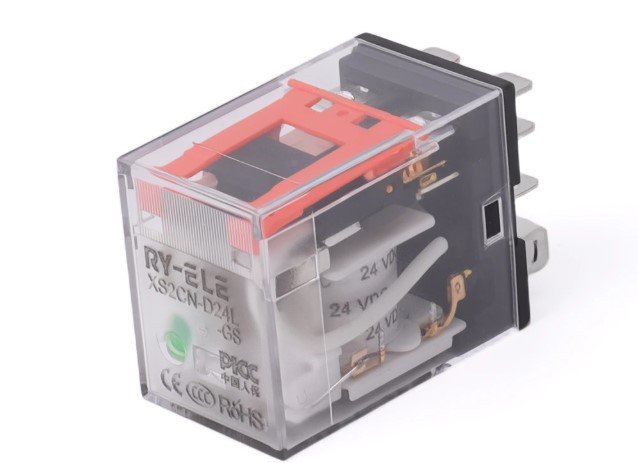
High-density control panels support more automation functions within limited enclosure space. This compact design helps manufacturers reduce panel size, simplify installation, and improve equipment efficiency. However, fitting more control components into a smaller area also creates challenges related to wiring, heat, spacing, and maintenance.
Choosing the right industrial control relays helps address these challenges while supporting dependable switching and signal control. Engineers need to consider relay dimensions, electrical ratings, coil requirements, contact configuration, mounting options, and operating conditions before selecting components for a compact control panel.
Why Relay Selection Matters in High-Density Panels
A relay does more than switch an electrical circuit. It provides an interface between control signals and connected loads, allowing automation systems to manage motors, solenoids, indicators, actuators, and other equipment.
In a high-density panel, each component must work efficiently within a restricted footprint. An oversized relay may consume valuable DIN rail or mounting space, while an unsuitable electrical rating can reduce system reliability.
Proper selection also helps create cleaner wiring layouts. Compact relays with suitable terminal arrangements can make connections easier to organize and simplify troubleshooting during maintenance.
Evaluate the Available Panel Space
Physical dimensions should rank among the first considerations when selecting relays for a compact control cabinet. Measure the available mounting area and determine how much space each component requires.
Pay attention to:
- Relay width, height, and depth
- DIN rail compatibility
- Terminal arrangement
- Required wiring clearance
- Spacing between adjacent components
- Access required for inspection or replacement
A narrow relay design may allow engineers to install more switching channels without expanding the enclosure. However, smaller dimensions should never take priority over electrical performance and safe installation requirements.
Match the Relay to the Electrical Load
Electrical compatibility remains critical regardless of panel size. Start by identifying the voltage and current characteristics of the load that the relay must control.
Check the relay’s rated values for both the coil and contacts. The coil must match the available control voltage, while the contacts must handle the connected load within their specified ratings.
Engineers should also consider the type of load. Resistive, inductive, and other load categories may create different switching demands. Motors, valves, contactors, and solenoids can produce conditions that require careful relay selection.
Choose the Right Contact Configuration
Relay contact configuration directly affects how a control circuit operates. Common configurations include normally open and normally closed contacts, with changeover arrangements available for applications that require greater flexibility.
Consider how the circuit should behave when the relay coil receives power and when it does not. A clear understanding of the required switching sequence helps prevent unnecessary rewiring and improves control logic.
For systems with multiple switching functions, selecting a relay with the appropriate contact arrangement can also reduce the number of separate components required inside the panel.
Consider Coil Voltage and Power Consumption
The relay coil must work correctly with the control system’s available voltage. Common control voltages include DC and AC options, depending on the application and panel architecture.
Coil power consumption also matters in high-density installations. Numerous relays operating together can contribute to overall panel power consumption and heat generation.
A suitable relay should therefore provide reliable operation without creating unnecessary demand on the control power supply. Reviewing the manufacturer’s electrical specifications helps engineers determine compatibility before installation.
Manage Heat in Compact Control Cabinets
High-density panels often place many components close together. This arrangement can increase the importance of thermal management.
Relays generate heat during operation, and surrounding components may also contribute to the cabinet’s internal temperature. Excessive heat can affect component performance and service life.
When selecting relays, review operating temperature specifications and installation requirements. Maintain appropriate spacing where required and consider the cabinet’s ventilation or cooling strategy.
A compact relay should fit the available space without compromising the thermal conditions required for dependable operation.
Prioritize Mounting and Wiring Convenience
Installation time can increase when components have difficult mounting arrangements or inconvenient terminal access. High-density panels benefit from relay designs that support organized installation and straightforward wiring.
DIN rail mounting provides a practical option for many industrial control applications. It allows components to share a structured mounting system while helping technicians maintain consistent panel layouts.
Terminal design also deserves attention. Clearly arranged terminals can simplify identification, reduce wiring confusion, and make future maintenance more efficient.
Check Switching Performance and Service Life
A relay may operate correctly during initial testing yet struggle under demanding switching conditions if its specifications do not match the application.
Review factors such as:
- Electrical endurance
- Mechanical endurance
- Switching frequency
- Contact material
- Response characteristics
- Permitted operating temperature
The expected switching cycle should align with the relay’s rated performance. Applications with frequent switching may require components designed for greater operational endurance.
Consider Protection and Environmental Conditions
Control panels may operate in environments exposed to vibration, dust, humidity, temperature changes, or electrical interference. Relay selection should account for the conditions surrounding the equipment.
Check the manufacturer’s specifications for operating temperature, insulation characteristics, dielectric strength, and other relevant environmental requirements.
Protection features can also help support reliable operation. Depending on the application, engineers may need to consider suppression methods for relay coils or loads that produce voltage spikes during switching.
Balance Compact Size With Long-Term Reliability
A smaller relay does not automatically make a better choice. High-density panel design requires a balance between space efficiency, electrical performance, accessibility, and durability.
Engineers should avoid selecting a component solely because it occupies less space. A relay that simplifies the panel layout while meeting all electrical and environmental requirements offers greater long-term value.
RY-ELE focuses on relay and control component solutions for industrial applications, giving engineers an option to consider when developing compact automation and control systems.
Create a Standardized Relay Selection Process
Standardization can make high-density panel design easier across multiple machines or product lines. Establishing consistent relay specifications helps engineering teams simplify purchasing, installation, documentation, and maintenance.
A practical selection process can follow these steps:
- Determine the required control and load voltages.
- Identify load type and contact requirements.
- Calculate the required switching capacity.
- Measure available mounting space.
- Confirm terminal and mounting compatibility.
- Review thermal and environmental conditions.
- Check expected switching frequency and service life.
- Verify applicable electrical and safety requirements.
This approach reduces the risk of choosing components based only on size or price.
Final Considerations for High-Density Control Panels
Selecting the right relay for a compact control panel requires more than finding the smallest available component. Electrical ratings, contact configuration, coil characteristics, dimensions, mounting style, heat generation, environmental conditions, and expected service life all influence the final decision.
The best choice supports reliable switching while fitting naturally into the panel’s overall architecture. Careful planning also creates cleaner wiring, easier maintenance, and better use of enclosure space.
For manufacturers and automation engineers, evaluating relay specifications before panel assembly can prevent costly redesigns and improve system reliability. With the right selection process and suitable components from suppliers such as RY-ELE, high-density control panels can maintain both compact layouts and dependable performance.