

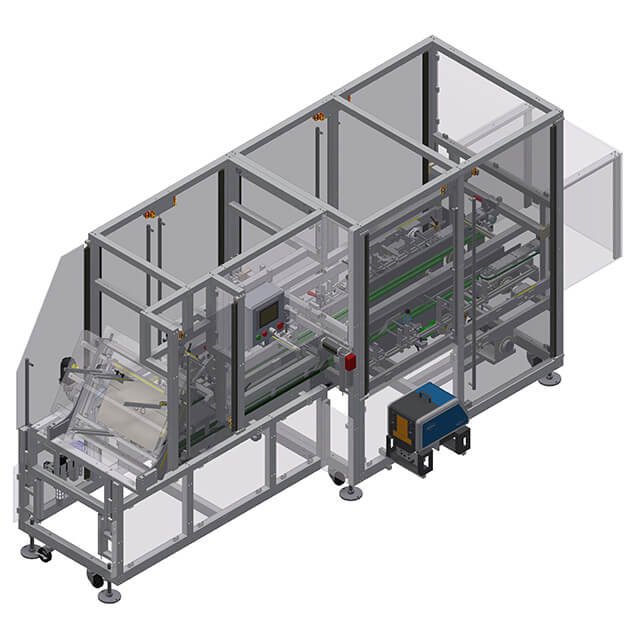
Carton material can have a significant effect on how packaging equipment performs. Differences in board thickness, stiffness, surface finish, and construction can influence how easily a flat blank opens, folds, and maintains its shape during the forming process.
A Case Erector Machine must work with the characteristics of the carton material being used. While corrugated board is widely used for shipping cases, different grades and constructions may require adjustments to forming, folding, and sealing components to achieve consistent results.
Corrugated Board
Corrugated cardboard is one of the most common materials used for shipping cases. Its fluted structure provides a combination of strength and relatively low weight, making it suitable for transporting a wide range of products.
The thickness and flute profile can vary, however. A machine configured for one carton grade may require adjustments when working with another to maintain reliable opening and folding.
Single-Wall Cartons
Single-wall corrugated cases contain one layer of fluting between two linerboards. They are commonly used for products where moderate protection and manageable carton weight are required.
These cartons are generally suitable for automated forming when their dimensions and board characteristics match the machine specifications. Consistent blank quality can further support smooth operation.
Double-Wall Cartons
Double-wall cartons contain two layers of corrugated material, giving them greater rigidity and strength. They are often selected for heavier or more demanding shipping applications.
Because these cases can be stiffer than single-wall cartons, forming equipment may need to provide sufficient force and accurate guidance during opening and folding. Machine compatibility should be confirmed before introducing a new carton grade.
Recycled Board
Many packaging operations use cartons made partly or entirely from recycled fiber. The material can have different physical characteristics from virgin-fiber board, depending on its composition and manufacturing process.
Variations in stiffness, compression resistance, and surface condition may affect carton handling. Testing representative blanks can help determine whether adjustments are necessary.
Coated and Printed Cartons
Some cases feature printed surfaces or specialized coatings for branding, identification, or additional protection. These finishes can alter the friction characteristics of the carton surface.
Equipment should handle such cartons without causing excessive scuffing, tearing, or surface damage. Proper guide adjustment can be particularly important when dealing with sensitive printed areas.
Heavy-Duty Packaging Board
Industrial and commercial products may require stronger cartons made from heavier board grades. These cases are designed to withstand higher loads and demanding transportation conditions.
A forming system handling heavy-duty blanks must be appropriately configured for the increased stiffness and weight. Forcing incompatible material through the machine can lead to poor forming or unnecessary component wear.
Factors That Affect Material Handling
Several carton properties can influence how effectively a machine forms a case:
- Board thickness
- Flute type and profile
- Carton dimensions
- Material stiffness
- Surface friction
- Moisture content
- Printing or coating
- Fold-line quality
- Blank construction
These characteristics should be considered together rather than evaluating carton material based on thickness alone.
The Importance of Crease Quality
Crease lines guide the carton as it changes from a flat blank into a three-dimensional case. If the creases are too weak, too deep, or poorly positioned, the carton may not fold as intended.
A well-produced blank with accurately defined fold lines can make automated forming more predictable, regardless of the particular board grade being used.
Adjusting the Forming Process
Different materials may require changes to machine settings or component positions. Guides, suction systems, folding mechanisms, and other handling elements need to work according to the physical properties of the carton.
The goal is not simply to apply more force. Controlled handling helps open and form the case while minimizing damage to the board.
Moisture and Storage Conditions
Carton material can also be affected by its storage environment. Excessive humidity may change the stiffness and dimensional stability of corrugated board, while very dry conditions can affect its flexibility.
Keeping cartons stored under suitable conditions can help maintain more consistent machine performance. Material handling should therefore be considered from storage through to final forming.
Testing Before Production
When introducing a new carton material, testing is an important step. Sample blanks can be run through the forming process to check opening, squaring, flap folding, sealing, and transfer.
Testing can reveal compatibility issues before the material is used in full-scale production. It also provides an opportunity to establish appropriate machine settings.
Selecting Equipment for Different Materials
The right forming equipment depends on more than the desired production speed. Carton construction, size range, board grade, sealing method, and integration with other packaging equipment all influence the selection process.
Techflow Pack can be evaluated alongside other equipment providers when manufacturers are comparing case-forming solutions for different carton materials and production requirements.
Building Reliable Material Handling Into the Line
Different box materials can behave differently even when their dimensions appear similar. Successful automated forming depends on matching the machine’s handling system to the physical properties of the carton.
By considering board construction, crease quality, storage conditions, machine settings, and compatibility testing, manufacturers can create a more reliable case-forming process and reduce problems caused by unsuitable or inconsistent packaging materials.