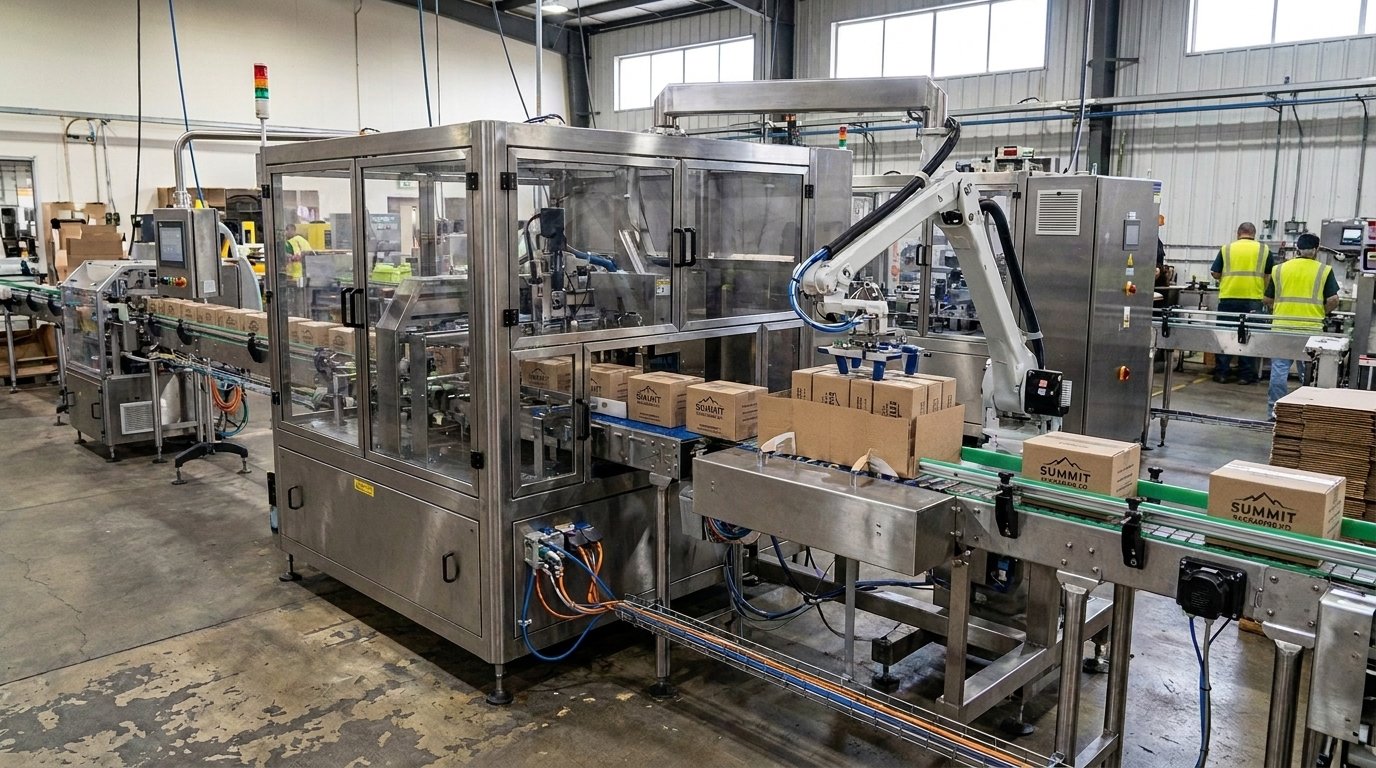
A case packing machine brings several mechanical and control systems together to complete one packaging cycle. Each component handles a specific task, from moving products into position to folding cardboard around the product group and sealing the finished case.
A wrap around packer uses these components as one coordinated system. Product conveyors, grouping mechanisms, carton handling parts, folding sections, sealing equipment, and controls all contribute to the final package. Understanding each part helps manufacturers evaluate equipment and identify the features that matter for their production line.
Product Infeed Conveyor
The product infeed conveyor provides the starting point for the packing process. It carries products toward the machine at a controlled rate.
Consistent product movement helps maintain the correct spacing before products reach the grouping section. The conveyor may also work with guides or other handling components to keep products properly aligned.
A stable infeed reduces the risk of products arriving in the wrong position and disrupting the packing cycle.
Product Grouping System
The grouping system arranges individual products into the required case pattern.
The machine needs to create the correct number of products in each group before loading them into the carton. The grouping arrangement depends on factors such as product dimensions, case size, and the required pack configuration.
Accurate grouping matters because an incorrect pattern can affect carton formation and finished case quality.
Product Positioning Components
Guides, belts, stops, and other positioning parts help control product movement inside the machine.
These components keep products aligned as they move between different stages. Proper positioning becomes especially important when the line handles products with different dimensions.
Good product control also helps prevent unnecessary movement that could lead to jams or damaged packaging.
Carton Blank Magazine
The carton blank magazine stores flat cardboard blanks before they enter the forming process.
The machine needs a reliable supply of blanks to maintain continuous operation. The magazine feeds individual cartons into the system according to the required production cycle.
Its capacity and feeding performance can influence how often operators need to replenish packaging material.
Carton Blank Feeding System
After the machine takes a blank from the magazine, the feeding system moves it into the correct position.
The system must separate blanks properly and deliver them at the right time. Double feeding or misalignment could interrupt the packing process.
Reliable blank feeding helps maintain a steady relationship between the product group and the carton.
Carton Forming Section
The forming section turns the flat cardboard blank into a case around the grouped products.
Unlike traditional pre-formed cases, wrap around packaging starts with a flat sheet of corrugated material. The machine folds different sections around the products as the package moves through the system.
The forming sequence needs precise timing so the cardboard follows the intended shape without interfering with the products.
Folding Mechanism
Folding components create the different panels and flaps that form the case.
As the product group moves forward, mechanical guides and folding elements bend the cardboard into position. Each fold contributes to the overall structure of the finished package.
Correct folding helps create clean corners and properly aligned flaps.
Adhesive Application System
Many wrap around cases use adhesive to secure the cardboard panels.
The adhesive system applies glue at specific points during the forming process. Correct placement matters because too little adhesive may weaken the case, while excessive adhesive can create mess and increase material consumption.
Timing also matters. The adhesive needs to reach the correct surface before the corresponding carton panel closes.
Compression Section
After folding and adhesive application, the case may pass through a compression area.
Pressure holds the folded panels together while the adhesive sets. This helps create a stronger bond and gives the finished case a more uniform shape.
The compression time depends on the adhesive, carton material, and machine configuration.
Sealing Components
Sealing components complete the case by securing the required carton flaps.
The exact sealing arrangement depends on the case design and packaging application. Proper sealing helps keep products contained during handling, transportation, and storage.
A consistent sealing process also gives finished cases a cleaner appearance.
Conveyor System
Conveyors connect the different stages of the machine.
They move products and partially formed cases from one section to another while maintaining controlled movement. Conveyor speed needs to work with the timing of the grouping, forming, and sealing processes.
A well-coordinated conveyor system helps the machine maintain continuous production instead of stopping between individual operations.
Machine Frame and Guarding
The frame provides structural support for the machine’s working components.
A rigid frame helps maintain alignment between conveyors, folding mechanisms, carton handling equipment, and other assemblies. Proper guarding also separates operators from moving components during normal operation.
Accessible machine areas can make routine inspection, cleaning, and maintenance easier for production teams.
Sensors and Detection Devices
Sensors help the machine monitor products, cartons, and machine positions throughout the packaging cycle.
Depending on the system, sensors may detect product presence, carton position, material supply, or potential problems.
These signals allow the control system to coordinate machine actions and respond when something does not match the expected operating condition.
Control System
The control system acts as the coordination center of the packaging machine.
It manages timing between different components and allows operators to select or adjust relevant production settings. Modern systems may also provide information about machine status, faults, and operating conditions.
A well-designed control interface makes it easier for operators to monitor the equipment and respond to problems.
Safety Systems
Safety components protect operators during machine operation.
These may include guarded areas, emergency stops, safety switches, and other protective devices. The exact configuration depends on the machine design and applicable workplace requirements.
Safety systems should never become an afterthought when manufacturers evaluate packaging equipment.
How These Components Work Together
Each component performs a separate task, yet the machine depends on their coordination.
A typical cycle follows this general sequence:
- Products enter through the infeed conveyor.
- The grouping system arranges the required product quantity.
- The carton system supplies a flat cardboard blank.
- The product group moves onto the carton blank.
- Folding components wrap the cardboard around the products.
- Adhesive or another sealing method secures the carton.
- Compression helps set the formed case.
- The finished case exits toward the next production stage.
The exact sequence may vary according to machine configuration and packaging requirements.
Why Component Quality Matters
A packaging machine can only perform as reliably as its critical components allow.
A problem with product feeding may affect grouping. Poor grouping can create problems during carton forming. A carton feeding issue can stop the entire cycle.
This interconnected nature makes component selection important. Manufacturers should evaluate the complete system instead of focusing on one feature or specification.
Which Components Matter Most for Your Application?
The most important components depend on what you package and how your production line operates.
Consider these factors when evaluating equipment:
- Product size and shape
- Products per case
- Case dimensions
- Carton material and thickness
- Required production rate
- Number of product formats
- Changeover frequency
- Available floor space
- Integration with existing equipment
These details help determine the machine configuration that makes sense for a particular operation.
How Techflow Pack Supports Automated Case Packing
Techflow Pack provides automated packaging solutions designed around specific production requirements.
A manufacturer may need different product handling, carton configurations, speeds, or changeover capabilities depending on its application. Looking at the complete packing process helps identify which machine components need particular attention.
Techflow Pack can help manufacturers evaluate these requirements when developing an automated case packing solution.
Final Thoughts
A wrap around packaging machine relies on many components working in sequence. Product handling, grouping, carton feeding, forming, folding, adhesive application, sealing, conveyors, sensors, controls, and safety systems all contribute to the final result.
Understanding these components makes equipment comparisons easier. Manufacturers can then focus on the features that directly affect their products, packaging formats, production targets, and long-term operating needs.