Custom plastic enclosures play a crucial role in modern electronics and industrial product development. As devices become more compact and application-specific, standard enclosures often fail to meet exact design requirements. Custom solutions allow engineers to create housings that perfectly match both functional and environmental needs.
In many engineering projects, plastic enclosures are selected because they offer excellent adaptability during the design and manufacturing process. This flexibility allows manufacturers to modify size, structure, and features without compromising durability or performance.
Why Customization Matters
Every electronic product has unique requirements depending on its application, environment, and internal components. Custom enclosures ensure that all these factors are properly addressed.
Customization is especially important when dealing with:
- Complex circuit layouts
- Space-limited electronic devices
- Specialized industrial systems
- Outdoor or harsh environmental conditions
By tailoring the enclosure design, engineers can improve performance, safety, and usability.
Design Flexibility of Plastic Enclosures
One of the biggest advantages of plastic enclosures is their ability to be molded into a wide range of shapes and sizes. This makes them ideal for custom applications where precision is required.
Common design flexibility options include:
Size and Shape Modifications
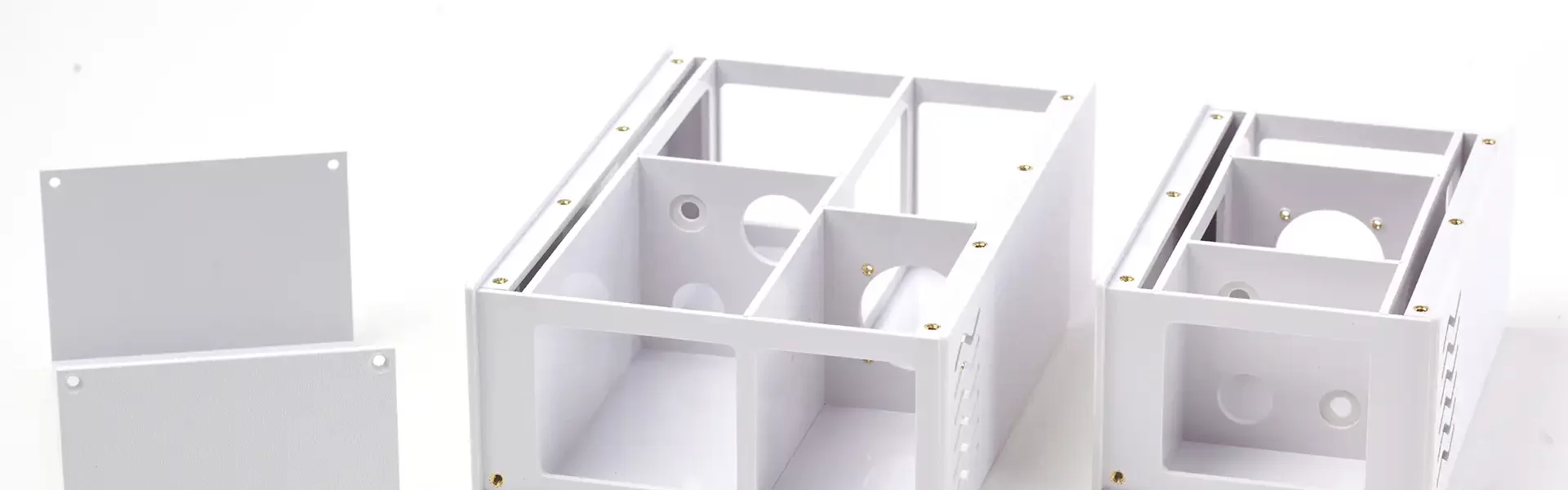
Enclosures can be designed to fit specific internal components, ensuring efficient use of space and better system organization.
Cutouts and Openings
Custom openings can be added for:
- Switches and buttons
- Display screens
- Cable entry points
- Connectors and ports
Internal Mounting Features
Designs can include standoffs, brackets, or rails to securely hold circuit boards and components in place.
Ventilation Design
Airflow channels or ventilation slots can be integrated to help manage heat generated by electronic components.
Manufacturing Options for Custom Plastic Enclosures
Plastic enclosures can be produced using several manufacturing methods depending on complexity, volume, and cost requirements.
Injection Molding
This is the most common method for mass production. It offers:
- High precision and consistency
- Cost efficiency for large volumes
- Smooth surface finishes
- Ability to produce complex shapes
CNC Machining
Used for prototypes or low-volume production, CNC machining allows:
- Fast design adjustments
- High accuracy for custom features
- Flexibility in design testing
3D Printing
Ideal for early-stage development, 3D printing provides:
- Rapid prototyping
- Low-cost design validation
- Easy iteration of design changes
Each method offers unique advantages depending on project requirements.
Material Options for Custom Enclosures
Material selection plays a key role in performance and durability. Different plastics are chosen based on environmental and functional needs.
ABS Plastic
- Good impact resistance
- Lightweight and cost-effective
- Easy to machine and customize
Polycarbonate
- Higher strength and durability
- Better heat and impact resistance
- Suitable for demanding environments
Blended Materials
Used when a balance of cost, strength, and flexibility is required.
Applications of Custom Plastic Enclosures
Custom enclosures are widely used across industries where standard solutions are not sufficient.
Common applications include:
- Industrial automation systems
- Medical and diagnostic equipment
- IoT and smart devices
- Communication and networking hardware
- Automotive electronic modules
These applications require precise design integration and reliable protection.
Benefits of Custom Plastic Enclosures
Custom solutions offer several advantages over standard off-the-shelf enclosures.
Key benefits include:
- Perfect fit for internal components
- Improved system performance and reliability
- Enhanced protection tailored to specific environments
- Better aesthetic and branding options
- Reduced need for post-production modifications
These benefits make customization essential in modern product development.
Conclusion
Custom plastic enclosures provide unmatched flexibility in design and manufacturing, making them ideal for a wide range of electronic and industrial applications. With options for different materials, manufacturing techniques, and structural modifications, they allow engineers to create highly optimized solutions. By choosing the right design approach, manufacturers can ensure better performance, protection, and efficiency in their final products.