

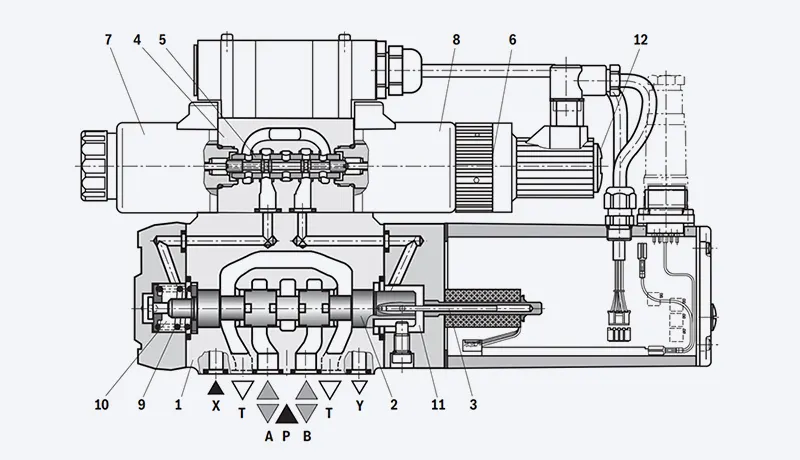
Industrial hydraulic systems often operate under demanding conditions and may have requirements that cannot be met by a standard valve. Selecting the right component requires consideration of hydraulic performance, physical compatibility, control requirements, reliability, and long-term maintenance.
A customized hydraulic control valve can be considered when a standard configuration does not provide the required combination of pressure, flow, dimensions, connections, or control characteristics. For industrial buyers, the selection process should focus on measurable application requirements rather than price alone.
Start With the Application
The first step is to understand where and how the valve will be used. Review the hydraulic circuit and identify the valve’s role within the system.
Determine which components the valve will control and how frequently it will operate. Information about pumps, actuators, pressure settings, and operating sequences can provide useful context for valve selection.
Define Pressure Requirements
Pressure is one of the most important specifications for an industrial hydraulic valve. Buyers should identify both normal working pressure and the highest pressure the system may experience.
Potential pressure spikes should also be considered. A valve should be selected according to the complete pressure range rather than only the typical operating point.
Determine Flow Capacity
Flow rate affects actuator speed and valve pressure drop. Specify the expected continuous flow as well as any peak flow that may occur during demanding operations.
The valve should provide sufficient capacity without being unnecessarily oversized. Reviewing pressure-drop characteristics at relevant flow rates can help with this decision.
Identify the Valve Function
Clearly define the function the valve needs to perform. Depending on the application, it may need to control direction, pressure, flow, load holding, or a combination of hydraulic functions.
The valve’s function determines its basic configuration and influences factors such as ports, internal components, adjustment ranges, and actuation.
Select the Control Method
Industrial systems can use different valve control methods, including manual, mechanical, hydraulic, pneumatic, electrical, and proportional actuation.
If the valve will connect to an automated control system, buyers should also specify electrical requirements, connector arrangements, input signals, and response characteristics where applicable.
Check Hydraulic Fluid Compatibility
The hydraulic fluid should be identified before the valve is selected. Fluid type and viscosity can affect internal component performance and seal selection.
Buyers should provide the expected fluid temperature and viscosity range as well. These details help determine whether the proposed materials are appropriate for the application.
Consider Temperature Conditions
Industrial machinery can experience elevated fluid temperatures, low ambient temperatures, or significant temperature fluctuations.
Specify the expected minimum and maximum operating temperatures. Valve materials and seals should be suitable for the complete range rather than only normal conditions.
Evaluate Physical Dimensions
A valve must fit within the available installation space. Check overall dimensions, mounting holes, port positions, adjustment access, and clearance for hoses or electrical connections.
Dimensional compatibility is particularly important when replacing an existing valve because modifications to the surrounding equipment may be costly.
Review Port and Connection Standards
Connection specifications should be confirmed before purchasing. These may include port size, thread type, connection standard, port orientation, and mounting configuration.
Providing an accurate installation drawing can help prevent misunderstandings and reduce the risk of receiving a valve that cannot be integrated into the existing hydraulic circuit.
Examine Material and Seal Options
Material selection should reflect pressure, temperature, hydraulic fluid, and environmental exposure. In demanding industrial environments, corrosion resistance and wear characteristics may also be important.
Seal materials should be evaluated for fluid compatibility and operating temperature. Buyers should ask for technical justification when a particular material or sealing configuration is recommended.
Assess Quality-Control Procedures
Quality control can have a major impact on valve consistency. Ask how the manufacturer inspects raw materials, machined components, assemblies, and finished valves.
Relevant quality checks may include dimensional inspection, pressure testing, leakage testing, flow testing, and functional verification.
Ask About Prototype Development
For complex or highly specialized applications, a prototype can provide an opportunity to verify the design before larger production quantities are ordered.
Buyers should understand the supplier’s prototype process, including design review, sample production, testing, revision procedures, and approval criteria.
Review Testing Capabilities
Testing requirements should be established before purchasing. Depending on the application, useful tests may include:
- Pressure resistance
- Flow performance
- Pressure drop
- Internal and external leakage
- Actuation and response
- Temperature performance
- Endurance testing
The testing program should correspond to the actual requirements of the industrial system.
Consider Production Consistency
A successful prototype is only one stage of the purchasing process. Buyers should also evaluate whether the manufacturer can reproduce the approved design consistently during production.
Process controls, inspection procedures, traceability, and change management can all contribute to consistent product quality.
Evaluate Technical Documentation
Proper documentation supports installation and future maintenance. Request relevant drawings, specifications, operating limits, connection information, and test records.
For customized components, revision control is particularly useful. It helps ensure that future orders are manufactured according to the correct version of the design.
Compare Lead Times
Industrial projects often operate according to strict schedules. Ask about engineering lead time, prototype delivery, production lead time, and the supplier’s capacity to handle repeat orders.
A realistic delivery schedule should account for design approval and testing rather than focusing only on manufacturing time.
Look Beyond the Purchase Price
Initial price is important, but it should not be the only purchasing criterion. A valve that costs less initially may become more expensive if it creates installation difficulties, requires frequent maintenance, or has a shorter service life.
Consider the total cost of ownership, including:
- Purchase and development costs
- Installation expenses
- Maintenance requirements
- Replacement costs
- Expected service life
- Potential downtime
- Technical support
This provides a more complete basis for comparing suppliers.
Ask About Long-Term Support
Industrial equipment may remain in service for many years. Buyers should therefore consider whether the supplier can provide technical assistance, replacement components, documentation, and support for future modifications.
Long-term support can be particularly valuable for customized valves because reproducing a specialized configuration may require access to original drawings and specifications.
Prepare a Detailed Purchase Specification
Before requesting quotations, compile the technical information into a clear specification. Include hydraulic requirements, physical dimensions, control details, environmental conditions, testing expectations, and documentation requirements.
Providing the same specification to multiple suppliers makes it easier to compare their proposals on an equivalent basis.
Final Buyer Checklist
Before placing an order, confirm that the supplier can meet the following requirements:
- Required pressure and flow range
- Correct valve function
- Suitable hydraulic fluid compatibility
- Appropriate temperature range
- Correct connections and dimensions
- Suitable actuation method
- Required environmental protection
- Defined quality-control procedures
- Appropriate testing capabilities
- Complete technical documentation
- Practical lead time
- Adequate long-term support
Final Considerations
Buying a customized hydraulic valve for an industrial project requires a balance of technical, commercial, and practical considerations. The most suitable option should match the hydraulic circuit while also fitting the installation environment and maintenance strategy.
A thorough purchasing process starts with accurate specifications and continues through supplier evaluation, prototype testing, production inspection, and final validation. By looking beyond the initial price and considering the valve’s complete lifecycle, industrial buyers can make more informed decisions and reduce the risk of compatibility or performance problems.