

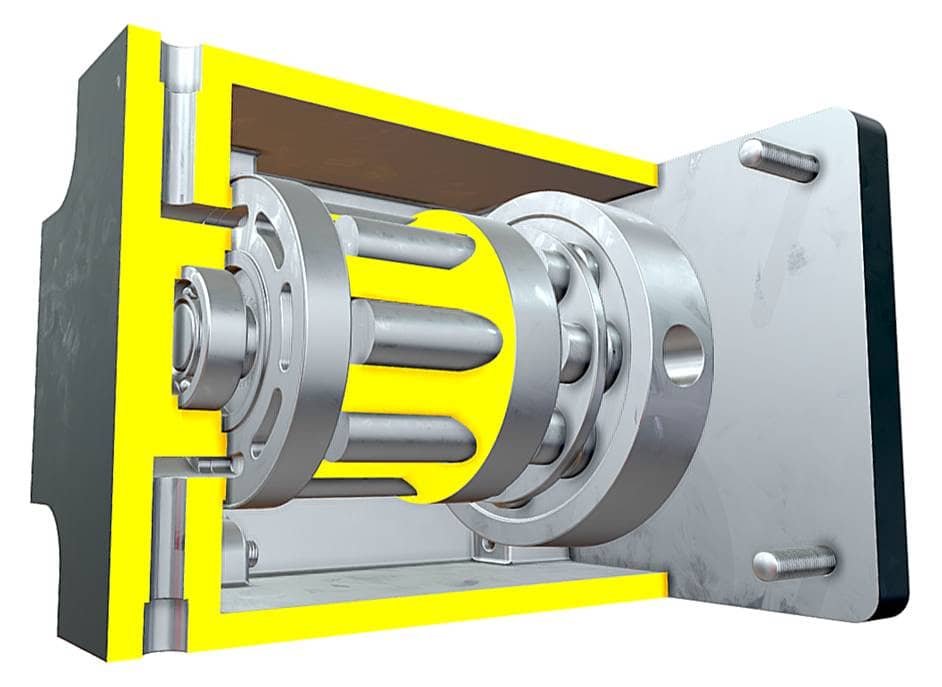
Industrial pumping systems often have requirements that cannot be met by a standard off-the-shelf product. Differences in pressure, flow, fluid characteristics, installation space, and operating cycles may require a pump to be adapted to the specific application.
Working with a piston pump manufacturer that provides OEM and custom manufacturing options can give engineering teams greater flexibility during equipment selection. However, customization should be based on clearly defined technical requirements rather than unnecessary modifications.
What Is OEM Piston Pump Manufacturing?
OEM manufacturing generally involves producing equipment or components according to the specifications, designs, branding, or technical requirements of another company.
In the piston pump industry, an OEM arrangement may involve supplying pumps for integration into larger machinery, industrial systems, processing equipment, or specialized assemblies.
The scope of an OEM project can vary considerably. Some customers require a standard pump with specific configurations, while others need extensive engineering changes.
What Is a Custom Piston Pump?
A custom piston pump is modified or designed to meet requirements that differ from a standard configuration. Customization may involve materials, dimensions, connections, drive arrangements, pressure ratings, or other technical characteristics.
The level of customization should depend on the application. Minor changes may be sufficient for some projects, while demanding applications may require a more comprehensive engineering process.
Common Customization Options
Manufacturers may offer several ways to adapt a piston pump to an industrial system.
Materials of Construction
Material selection is one of the most important customization considerations. Pump components exposed to the working fluid must be compatible with its chemical and physical properties.
Depending on the application, customers may need specific materials for cylinders, pistons, valves, seals, packing, shafts, or other wetted components.
Flow and Pressure Requirements
A pump may need to operate within a specific pressure and flow range. Custom configurations can help align the equipment with the actual operating requirements of the system.
It is important to distinguish between maximum rated performance and continuous operating performance. The pump should be selected according to its expected working conditions.
Connection and Mounting Dimensions
Physical compatibility can be critical when a pump is being integrated into existing equipment. Custom inlet and outlet connections, mounting arrangements, dimensions, or shaft configurations may be required.
Providing accurate installation drawings and interface specifications can help prevent compatibility problems during assembly.
Drive Configuration
Piston pumps can be integrated with different drive systems depending on the application. Motor selection, speed, shaft configuration, and transmission arrangements may all affect pump performance.
The drive system should be evaluated together with the pump rather than treated as a separate component.
OEM Integration Into Larger Equipment
OEM piston pumps are often incorporated into machinery designed and assembled by another company. This creates additional requirements beyond basic pump performance.
The pump may need to match the host machine’s dimensions, controls, connections, operating speed, and maintenance procedures.
Documentation for OEM Projects
OEM customers may require detailed technical documentation to support system design and production. Depending on the project, this can include:
- Dimensional drawings
- Performance specifications
- Materials information
- Installation instructions
- Maintenance documentation
- Testing records
- Spare-parts information
Consistent documentation helps engineering teams integrate the pump into their own product or production system.
Benefits of Custom Manufacturing
Custom manufacturing can provide several practical advantages when standard equipment does not fully match an application.
A properly designed custom pump can improve mechanical compatibility, accommodate unusual fluid properties, fit restricted installation spaces, and align more closely with system pressure and flow requirements.
Customization can also reduce the need for extensive modifications elsewhere in the system.
When Customization May Not Be Necessary
Not every project requires a custom design. If a standard pump already meets the required pressure, flow, materials, dimensions, and operating conditions, additional modifications may increase cost and production time without providing meaningful benefits.
Buyers should first determine whether an existing configuration can meet the application requirements. Customization should address a genuine technical need.
The Custom Manufacturing Process
A structured process helps ensure that a customized piston pump meets the intended requirements.
1. Define the Application
The process begins with collecting information about the fluid, pressure, flow, temperature, operating cycle, installation environment, and system interfaces.
Accurate application data gives engineers a reliable foundation for evaluating possible designs.
2. Review Technical Requirements
The manufacturer and customer should review the specifications together. Potential limitations, design assumptions, and performance targets should be clearly identified.
This stage is important because unclear requirements can lead to design changes later in the project.
3. Develop the Configuration
The manufacturer can then determine an appropriate pump configuration based on the agreed requirements.
Depending on the project, this may involve selecting materials, dimensions, valves, seals, drive arrangements, and other components.
4. Prototype or Validate the Design
For more complex projects, prototype development or engineering validation may be appropriate. Testing can help confirm that the proposed configuration performs as expected.
The extent of validation should correspond to the technical complexity and risk of the application.
5. Manufacturing and Inspection
Once the design is approved, production can begin under controlled manufacturing procedures. Critical components should be inspected to ensure they meet the required specifications.
Quality checks throughout production can help maintain consistency between units.
6. Final Testing
Completed pumps may undergo pressure, leakage, performance, or operational testing according to the project’s requirements.
Test results can provide useful confirmation that the finished equipment meets the agreed specifications.
Quality Control in OEM Production
Consistency is particularly important for OEM customers because pumps may be installed in multiple machines or production systems.
Manufacturers should maintain appropriate control over materials, machining, assembly, inspection, and testing. Consistent processes help ensure that replacement or future production units maintain the required specifications.
Lead Time and Production Planning
Custom and OEM projects can require more time than standard pump orders. Engineering reviews, design approval, specialized components, tooling, testing, and production scheduling can all affect lead times.
Project teams should establish realistic schedules at the beginning of the process. Early communication about required delivery dates can help manufacturers plan production more effectively.
Cost Considerations
Customization usually affects the total cost of a piston pump. Additional engineering, specialized materials, modified components, tooling, testing, or lower-volume production can increase the price.
However, the lowest-cost configuration is not always the most economical choice. Buyers should consider whether customization can improve installation, reliability, maintenance, or overall system performance.
How to Select an OEM and Custom Pump Supplier
When comparing potential suppliers, consider their ability to handle the complete project rather than focusing solely on manufacturing capacity.
Key evaluation areas include:
- Engineering and design capabilities
- Manufacturing equipment
- Material and component selection
- Quality-control procedures
- Testing capabilities
- Production capacity
- Documentation
- Spare-parts support
- Communication and technical assistance
The supplier should also be able to clearly explain the limitations and expected performance of the proposed configuration.
Information Buyers Should Provide
Providing complete technical information can make the customization process faster and more accurate.
Useful information may include fluid specifications, required flow, pressure range, operating temperature, duty cycle, available installation space, connection dimensions, drive requirements, and environmental conditions.
Drawings or existing equipment specifications can also help manufacturers understand integration requirements.
Long-Term Support for Custom Pumps
A custom pump should be considered as part of a long-term equipment strategy. Replacement components, maintenance procedures, technical documentation, and future production requirements should be discussed before the initial order.
This is especially important for OEM customers who may need consistent pump configurations over several production cycles.
Conclusion
OEM and custom piston pump manufacturing can provide practical solutions for industrial systems with specialized requirements. Customization may involve materials, pressure and flow characteristics, dimensions, connections, drive arrangements, or other design elements.
The most effective approach is to begin with clearly defined application requirements and work through design, validation, manufacturing, inspection, and testing in a structured manner. By evaluating engineering capability, quality control, documentation, production planning, and long-term support, buyers can determine whether an OEM or custom manufacturing solution is appropriate for their project.