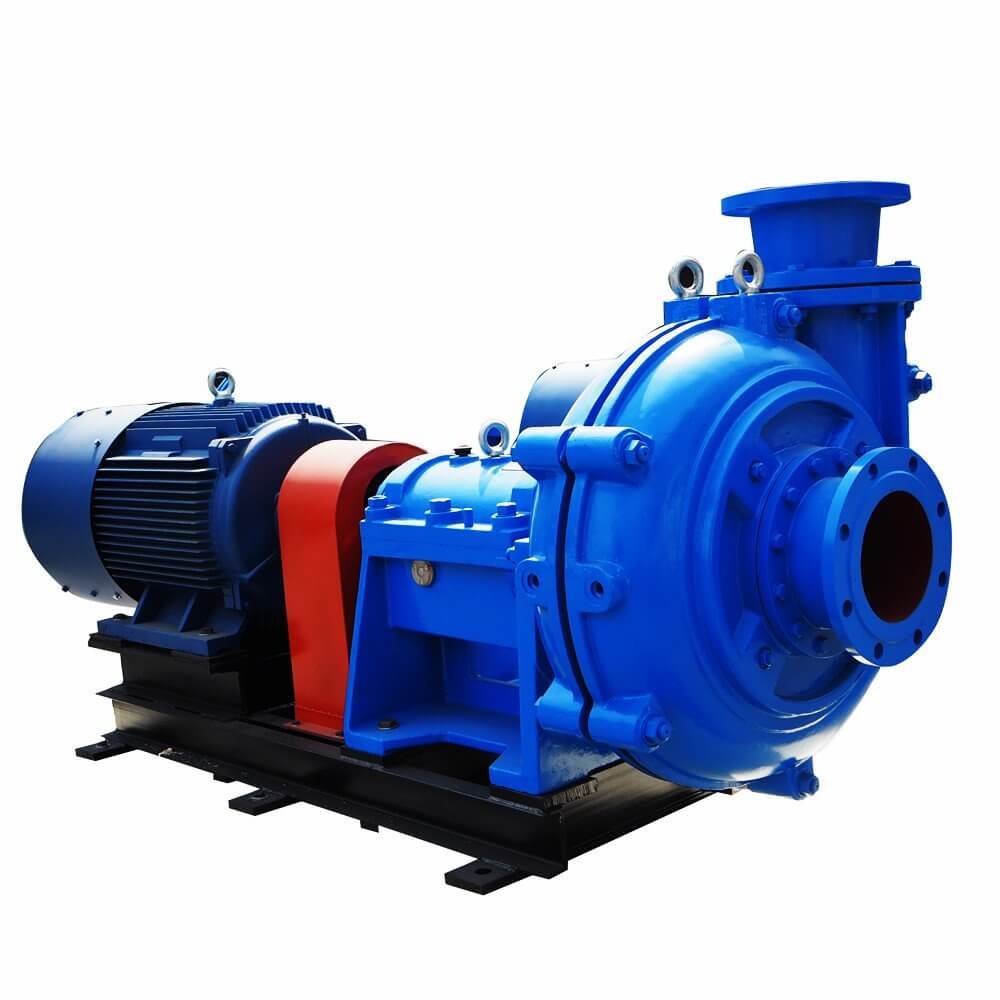
A centrifugal slurry pump is designed to transport liquid mixtures containing solid particles through industrial piping systems. These pumps are commonly used where conventional water pumps may struggle with abrasive or dense materials.
A well-designed centrifugal slurry pump combines centrifugal pumping principles with wear-resistant construction. Its components work together to move slurry efficiently while handling the demanding conditions created by suspended solids.
What Is a Centrifugal Slurry Pump?
A centrifugal slurry pump uses a rotating impeller to transfer energy to a slurry mixture. As the impeller rotates, centrifugal force moves the slurry from the center toward the outer edge of the pump.
The resulting velocity is converted into pressure within the pump casing, allowing the slurry to flow through the discharge pipeline. Unlike standard centrifugal pumps, slurry pumps are built to withstand abrasive particles and higher levels of solid content.
Types of Centrifugal Slurry Pumps
Different slurry pumping applications require different pump configurations. The main types are selected according to slurry characteristics, operating conditions, and installation requirements.
Horizontal Slurry Pumps
Horizontal slurry pumps are widely used in mineral processing, mining, and industrial applications. Their horizontal shaft arrangement makes them suitable for installations where the pump and drive system are positioned on a common base.
They are often selected for applications requiring continuous operation and relatively high flow rates.
Vertical Slurry Pumps
Vertical slurry pumps have a vertical shaft and are commonly used where sump pumping or submerged operation is required. The pump’s arrangement can help handle slurry collected in tanks, pits, and other open systems.
These pumps are particularly useful when conventional suction arrangements are difficult to implement.
Submersible Slurry Pumps
Submersible designs operate directly within the slurry. Because the pump is placed close to or inside the material being handled, they can be useful for drainage, dredging, and slurry transfer applications.
Their selection depends on factors such as immersion depth, slurry properties, and required pumping capacity.
Main Components of a Centrifugal Slurry Pump
Each component has an important role in achieving reliable slurry transportation.
Impeller
The impeller is the primary rotating component. It transfers mechanical energy from the drive system to the slurry and creates the velocity needed for pumping.
Impeller geometry affects flow rate, pressure, efficiency, and the pump’s ability to handle solids.
Pump Casing
The casing surrounds the impeller and guides the slurry toward the discharge outlet. It also helps convert the velocity generated by the impeller into pressure.
Because the casing is exposed to slurry, its material and thickness are important considerations in abrasive applications.
Shaft
The shaft transfers rotational power from the motor to the impeller. It must provide sufficient strength and rigidity to operate reliably under the pump’s expected loads.
Proper shaft alignment is also important for reducing vibration and unnecessary wear.
Shaft Sealing Arrangement
A sealing system helps prevent slurry or pumped fluid from escaping around the rotating shaft. Depending on the pump design and operating conditions, different sealing arrangements may be used.
The appropriate sealing method depends on pressure, slurry characteristics, maintenance requirements, and operating environment.
Wear Liners
Wear liners protect the main casing and other internal surfaces from abrasive particles. They can often be replaced when worn, helping reduce the need to replace larger pump components.
Material selection is especially important when handling hard or sharp solids.
Bearings
Bearings support the rotating shaft and help maintain proper alignment during operation. Adequate lubrication and routine inspection are essential for extending bearing service life.
Functions of a Centrifugal Slurry Pump
The primary function is to move slurry from one location to another, but its performance involves several important factors.
A slurry pump must generate enough pressure to overcome pipeline resistance and elevation differences. At the same time, it needs to maintain adequate flow without causing excessive wear or energy consumption.
Its design also allows it to handle suspended solids that could damage equipment intended for clean-liquid service.
How Does It Handle Abrasive Slurry?
Abrasive slurry can cause erosion as particles repeatedly contact internal pump surfaces. This is one of the main challenges in slurry pumping.
To address this issue, slurry pumps may use hardened metals, elastomer liners, reinforced components, or other wear-resistant materials. The best choice depends on particle size, hardness, concentration, and chemical properties.
Operating the pump within its intended range is equally important. Excessive flow velocity or unsuitable operating conditions can accelerate wear.
Common Applications
Centrifugal slurry pumps are used across industries where solid-liquid mixtures need to be transported. Typical applications include:
- Mining and mineral processing
- Tailings transportation
- Coal preparation
- Sand and gravel processing
- Dredging
- Construction dewatering
- Ash handling
- Industrial processing
- Sludge and solids transportation
Each application may require a different pump configuration based on the properties of the slurry and the required operating conditions.
Factors to Consider When Selecting a Slurry Pump
Choosing the correct pump starts with understanding the material being transported. Important factors include slurry density, solids concentration, particle size, and abrasiveness.
Flow rate and discharge pressure are also essential. Pipeline length, elevation changes, pipe diameter, and the number of bends can significantly affect the required pump performance.
Other considerations include:
- Operating temperature
- Chemical compatibility
- Suction conditions
- Expected operating hours
- Maintenance requirements
- Available motor power
- Required wear resistance
Careful selection can improve pumping efficiency while helping control maintenance and replacement costs.
Maintenance and Operating Practices
Regular inspection helps identify wear before it causes serious performance problems. Wear liners, impellers, seals, bearings, and other critical components should be inspected according to the operating environment.
Operators should also watch for unusual vibration, noise, leakage, temperature changes, or reduced flow. These symptoms can indicate internal wear, blockage, misalignment, or other operating issues.
Conclusion
A centrifugal slurry pump is engineered to move liquid-solid mixtures under conditions that can be too demanding for conventional pumps. Its impeller, casing, shaft, sealing system, bearings, and wear components work together to provide reliable slurry transportation.
Understanding the different pump types, component functions, slurry properties, and operating requirements makes it easier to select a suitable system for a particular application. Proper sizing, installation, and maintenance can also help improve service life and maintain consistent pumping performance.