ISO 8 cleanrooms are controlled environments that maintain a moderate level of cleanliness, suitable for many industrial and manufacturing processes where contamination control is important but ultra-low particle counts are not required. These cleanrooms are commonly used in pharmaceutical manufacturing, electronics assembly, medical device production, food and beverage processing, and cosmetic manufacturing. Proper design and construction are essential to ensure that the ISO 8 cleanroom operates efficiently, meets regulatory standards, and maintains a controlled environment that supports product quality and safety.
Designing and constructing an ISO 8 cleanroom requires a thorough understanding of cleanroom standards, airflow requirements, materials, and operational needs. Organizations that implement an ISO 8 Cleanroom must ensure that every aspect of the facility—from walls and floors to HVAC systems and personnel protocols—is carefully planned and executed. Effective design and construction minimize contamination risks, reduce maintenance challenges, and support regulatory compliance.
Cleanroom Layout and Workflow
The layout of an ISO 8 cleanroom is a critical aspect of its design. The goal is to create an efficient workflow that minimizes the movement of personnel, materials, and equipment while reducing the risk of contamination. Typically, cleanrooms are divided into zones with progressively cleaner areas leading to critical manufacturing or assembly spaces. This zoning helps maintain pressure differentials and directs airflow from cleaner areas to less clean areas.
Workstations, equipment placement, and material storage must be strategically planned to prevent cross-contamination and allow easy access for cleaning and maintenance. Personnel entry and exit points, gowning areas, and airlocks should be located to control contamination introduction and maintain consistent environmental conditions.
Construction Materials and Surfaces
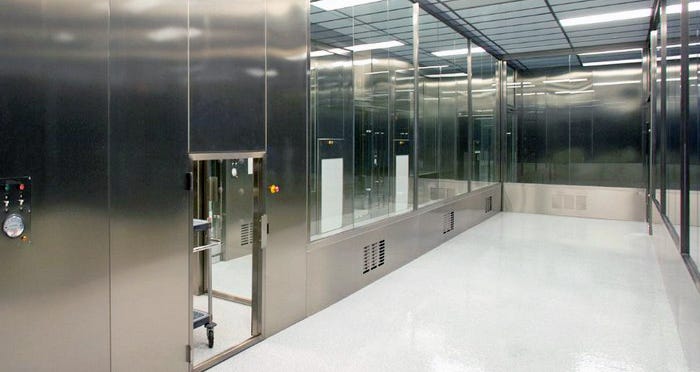
Materials used in ISO 8 cleanroom construction must be non-porous, smooth, and resistant to abrasion and cleaning agents. Walls, ceilings, and floors should be made from materials that do not shed particles and are easy to sanitize. Common choices include epoxy-coated surfaces, stainless steel panels, seamless vinyl flooring, and powder-coated or laminated wall panels.
All joints, seams, and corners must be sealed to prevent particle accumulation and facilitate cleaning. Furniture, shelving, and workstations should also be constructed from non-shedding materials. By selecting appropriate materials, the cleanroom can maintain ISO 8 cleanliness levels while minimizing maintenance requirements and contamination risks.
HVAC Systems and Airflow Design
Effective HVAC systems are essential for maintaining air quality, temperature, and humidity in ISO 8 cleanrooms. The system must provide filtered air to remove particulate matter and ensure proper circulation throughout the space. While ISO 8 cleanrooms allow higher particle counts than ISO 5 or ISO 6 environments, maintaining controlled airflow is critical to prevent localized contamination.
Airflow is typically designed to be laminar or unidirectional in areas where contamination control is most important. HEPA or ULPA filters are installed to remove particles from incoming air. Pressure differentials are maintained between zones to direct airflow from cleaner areas to less clean areas. Regular monitoring and validation ensure that the HVAC system performs consistently and meets ISO 8 standards.
Lighting, Electrical, and Utility Considerations
Lighting and utilities in an ISO 8 cleanroom must be designed to minimize contamination risks. Lighting fixtures should be flush-mounted or sealed to prevent particle accumulation and facilitate cleaning. Electrical outlets, wiring, and utility conduits should be positioned to avoid interference with airflow and to ensure that cleaning staff can access surfaces easily.
Utilities such as water, compressed air, and vacuum systems should be integrated into the cleanroom design without introducing contamination risks. Pipework and ducts should be properly sealed, and maintenance access should be planned to avoid disrupting cleanroom operations.
Cleaning and Maintenance Integration
An essential aspect of ISO 8 cleanroom design is facilitating effective cleaning and maintenance. Surfaces, floors, ceilings, and equipment must be accessible for routine sanitation without disrupting operations. Cleanroom design should minimize clutter and obstacles, ensuring that cleaning personnel can reach all critical areas.
Cleaning protocols should be considered during the design phase, including the selection of materials compatible with approved disinfectants. Incorporating adequate storage for cleaning supplies and waste disposal helps maintain hygiene standards while supporting efficient operations.
Validation and Monitoring Provisions
ISO 8 cleanrooms must be validated to confirm that they meet particle count limits, airflow requirements, and environmental parameters such as temperature and humidity. During design and construction, provisions should be made for monitoring equipment, such as particle counters, pressure gauges, and environmental sensors. These tools ensure that the cleanroom operates according to standards and allows for ongoing verification of cleanliness levels.
Designing with monitoring in mind also supports regulatory compliance and facilitates audits, inspections, and process validation.
Personnel Flow and Gowning Areas
Personnel movement is a major source of contamination in cleanrooms. An effective ISO 8 cleanroom design includes designated gowning areas, airlocks, and controlled entry points to manage personnel flow. Proper gowning protocols, combined with workflow design, minimize the risk of particle introduction and support consistent cleanroom conditions.
Training and procedural signage should complement the physical design to reinforce proper behavior and contamination control.
Conclusion
ISO 8 cleanroom design and construction require careful planning, attention to materials, airflow, utilities, and personnel flow. By selecting appropriate surfaces, HVAC systems, and equipment placement, organizations can maintain a controlled environment that supports contamination control, regulatory compliance, and operational efficiency. Integrating cleaning, monitoring, and validation provisions during design ensures long-term reliability and protects product quality across a wide range of industries. A well-designed ISO 8 cleanroom balances cost, functionality, and contamination control to meet the specific needs of each application.